
Best Hot Wire Anemometer Probe for HVAC Airflow Balancing (2026)
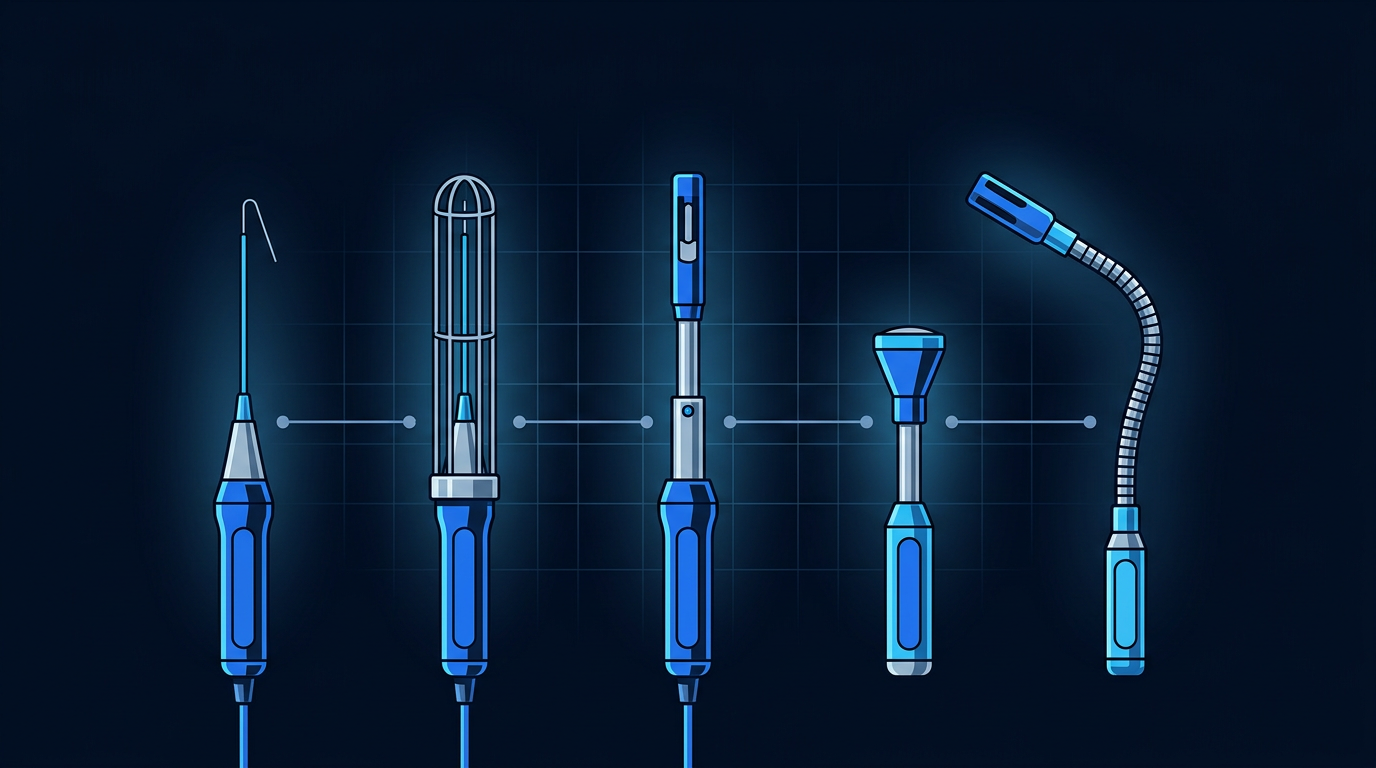
The best hot wire anemometer probe for HVAC airflow balancing delivers stable low-flow readings, quick averaging, and reliable compensation for temperature and density. In TAB work, that precision translates to comfort, energy savings, and fewer call-backs. In 2026, standout improvements include smarter apps, faster sampling, and better sensor protection—key advantages over older models that drifted faster and logged inconsistently.
Key takeaways
- Hot wire probes excel at low velocities (below 200 fpm) and tight spaces where vanes struggle.
- Prioritize accuracy across 30–2,000 fpm, fast response, and ISO/IEC 17025 calibration options.
- Look for telescopic stems, 0–90° heads, and density compensation to reduce balancing errors.
- Modern apps with project folders, live trending, and CSV/PDF export accelerate reporting.
- Protect sensors with filters, clean regularly, and verify zero before each session.
Introduction: Why the Best Hot Wire Anemometer Probe Matters for HVAC Airflow Balancing
HVAC balancing hinges on accurate velocity measurements converted to airflow. Hot wire anemometer probes sense velocity by measuring heat loss from a heated element. Their sensitivity at low flows makes them indispensable for diffusers, grilles, and low-velocity ducts. The right probe reduces uncertainty and helps meet design CFM without oversizing or rework.
Accurate airflow measurement improves comfort, reduces drafts, and supports energy targets. It also supports code compliance where minimum ventilation rates are verified by field tests. Documented readings with timestamps and calibration certificates protect projects during commissioning, warranty, and audits.
In 2026, leading probes added higher sampling rates for turbulence smoothing, improved temperature compensation, IP-rated sensor tips, and robust app ecosystems. Compared to prior years, you get more stable low-flow resolution, faster reporting, and better durability—critical for daily TAB and commissioning teams.
- pitot tube vs hot wire: Which Duct Traverses?
How Hot Wire Anemometer Probes Work and When to Use Them

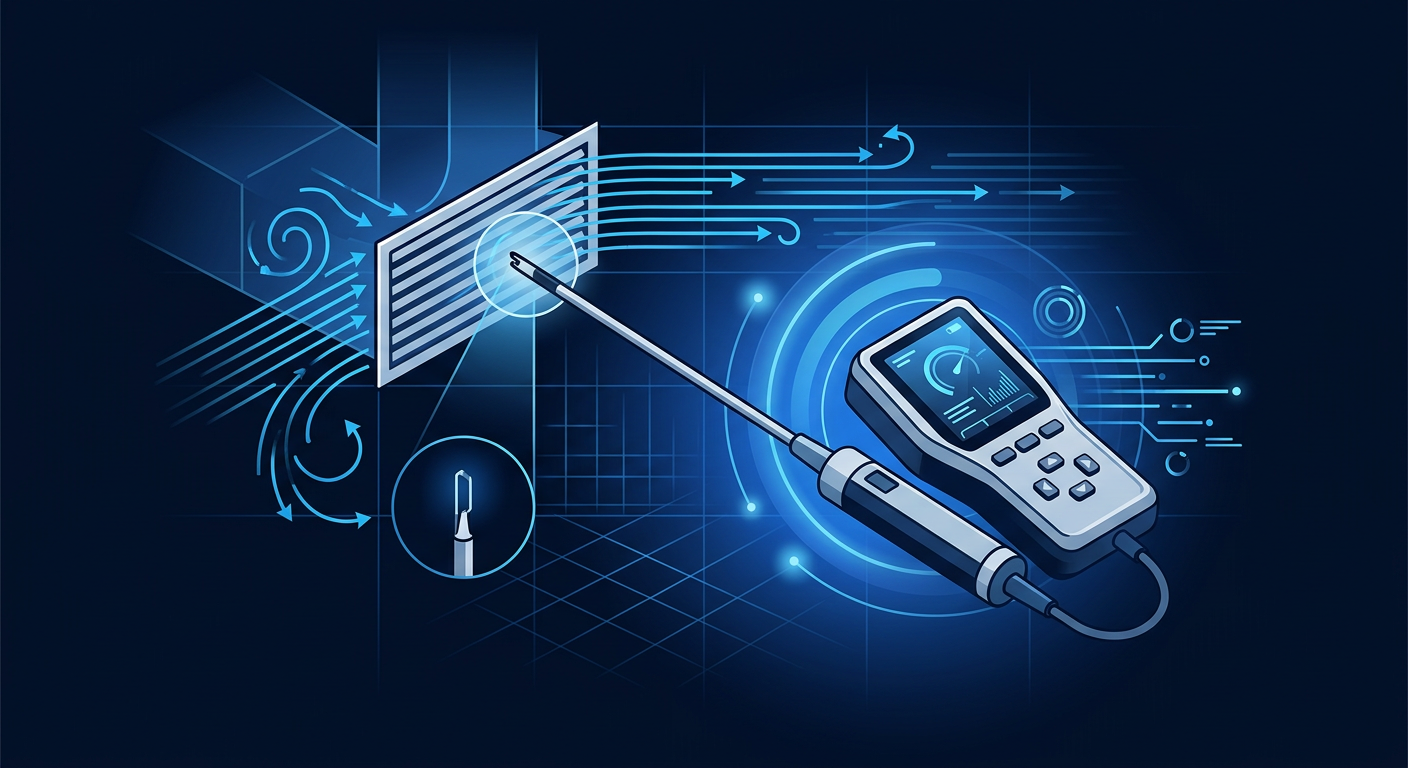
Hot wire probes rely on thermal anemometry. A fine heated element cools as air passes; the instrument relates cooling (heat loss) to velocity using calibration curves. Sophisticated electronics linearize output and apply temperature compensation. Many HVAC probes measure temperature simultaneously to refine density corrections in their airflow calculations.
Strengths compared to vane anemometers include higher sensitivity below 200 fpm, excellent directional resolution, and compact tips for diffusers and small registers. Hot wires shine in low-flow return paths, labs, and cleanrooms. Vane meters are rugged and great for larger, higher-velocity flows at grilles or in open duct sections.
Limitations exist. The sensor is fragile, susceptible to oil and dust fouling. Aggressive cleaning can damage elements. Measurements can drift if temperature compensation is off. Probes require warm-up, stable positioning, and careful handling to avoid orientation bias and self-heating effects.
Ideal HVAC scenarios include swirl diffusers, slot diffusers, perforated return grilles, and low-velocity duct zones. They also support IAQ studies, where drafts and micro-climate flows matter. Use them to fine-tune spaces that feel stuffy or drafty, and to troubleshoot systems failing to meet minimum ventilation rates.
Best Balometer Hoods Commissioning
- Best Balometer Hoods Commissioning
Key Buying Criteria for the Best Hot Wire Anemometer Probe for HVAC Airflow Balancing

Accuracy and resolution should cover 30–2,000 fpm (0.15–10 m/s). Look for stated accuracy as a percent of reading with a small floor value at low velocities. A resolution of 1 fpm or 0.01 m/s helps detect subtle differences at diffusers and in return paths.
Probe design matters in the field. Telescopic stems reaching 30–40 inches reduce ladder repositioning. Small tip diameters fit tight registers. Articulating 0–90° heads simplify perpendicular placement at diffusers. Flexible cable probes can snake around obstacles, but verify they lock position.
Environmental compensation stabilizes readings. Prioritize devices that capture air temperature and allow barometric pressure entry. Some include relative humidity for density refinement. Consistent compensation reduces CFM errors in mixed outdoor air or temperature gradients between supply and exhaust.
Response time affects productivity and data quality. Faster electronics with configurable damping and time-averaging deliver stable numbers quickly. For logging, confirm sampling rate (e.g., 1–10 Hz), onboard memory size, and averaging modes (moving, timed, or rolling). Project-level logging with event markers speeds reporting.
Calibration is non-negotiable. Choose brands offering ISO/IEC 17025 or NIST-traceable certificates. Review drift specs and recommended intervals. Field verification options—like zero-flow caps or reference channels—save trips. Ensure certificates are digital and easily attached to job reports.
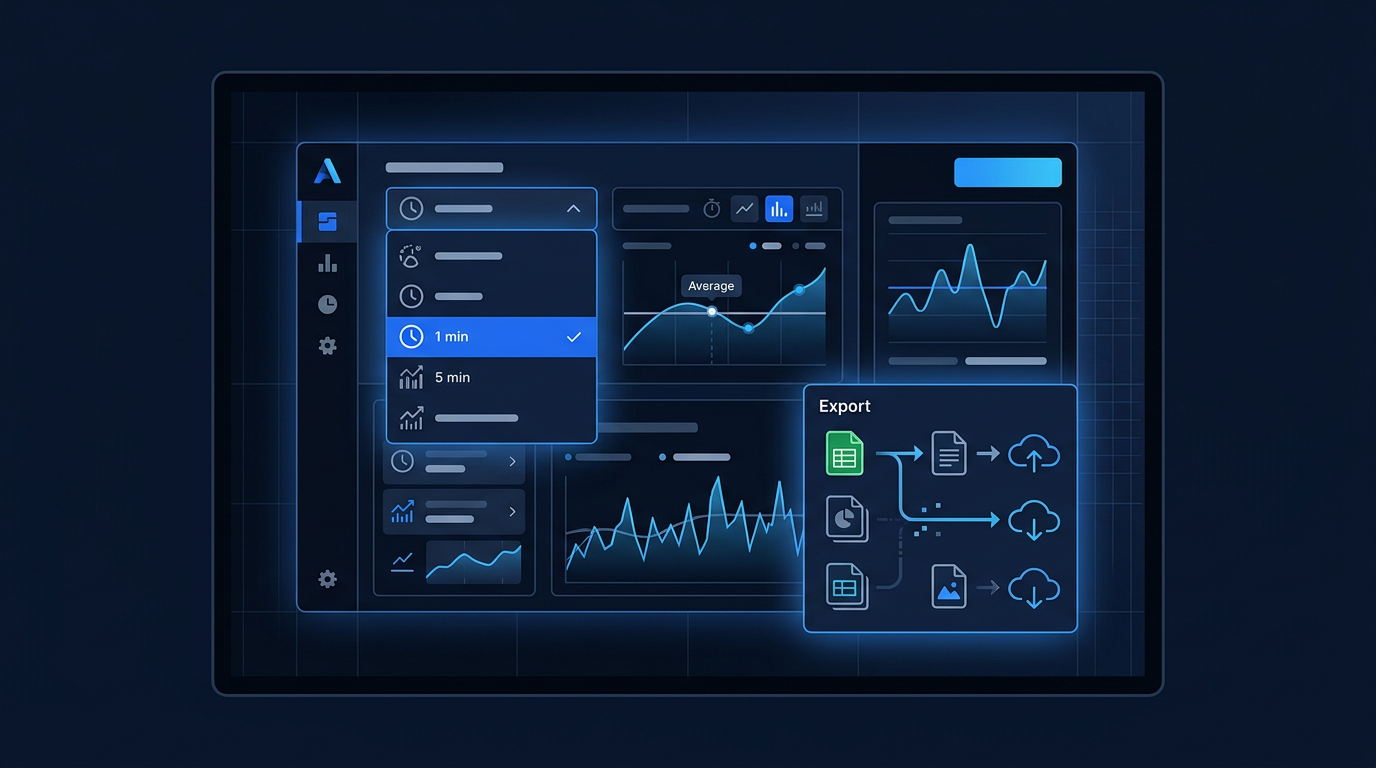
Connectivity can transform your workflow. Bluetooth or USB allows live trending and cloud export to CSV or PDF. Look for app features like project folders, photo annotation, duct library, and K-factor support. Desktop syncing helps standardize templates and share reports with stakeholders.
Durability reduces total cost. Sensor protection cages, replaceable filter caps, and IP ratings guard against dust. Check operating temperature range and include a padded case for transport. Metal stems with reinforced joints survive everyday site abuse better than plastic.
Ergonomics keep techs efficient. A backlit display, one-handed buttons, and glove-friendly UI matter on ladders. Magnet or strap mounts free hands. Swappable batteries or long runtimes avoid mid-balancing downtime. A bright hold function prevents misreads near ceilings.
button
- button
Top Picks 2026: Best Hot Wire Anemometer Probes for HVAC Airflow Balancing
Best overall: Testo 405i (with Testo Smart App) and Testo 405-V1 style telescopic hot wire probes remain a favorite for TAB due to low-flow sensitivity, compact tip, and strong app support. Their app-based reporting, averaging, and quick density inputs streamline diffuser and grille work for most commissioning tasks.
Best for low-flow precision: TSI Alnor 8455 and TSI 9565-P models with high-sensitivity thermal probes excel in cleanrooms and labs. Their fast sampling, tight low-end resolution, and ISO/IEC 17025 calibration options make them ideal where 30–100 fpm accuracy drives compliance and comfort outcomes.
Best value: Extech AN300 series and FLIR-branded Extech variants offer solid ratios, straightforward displays, and practical telescopic stems. They suit routine TAB on commercial projects where budget matters, without sacrificing reliable averages or basic logging features.
Best for commissioning teams: TSI 9565 with thermal anemometer probe and multi-parameter kits (adding temperature and humidity) shine on large projects. Advanced logging, robust averaging modes, and enterprise-ready reporting shorten turnover from field measurements to stamped deliverables.
Best compact probe: Testo 405i Smart Probe fits toolbags and excels at quick spot checks, balancing light commercial diffusers, and diagnosing comfort complaints. The app’s live trending and simple density settings help non-specialists produce consistent results in minutes.
How to Perform an Accurate Airflow Traverse
- How to Perform an Accurate Airflow Traverse
Detailed Comparison: Specifications and Real-World Performance

Velocity range, accuracy, and repeatability define reliability. TSI’s high-end probes maintain excellent repeatability at low flows through faster sampling and advanced filtering. Testo’s smart probes provide adequate accuracy for TAB ranges and strong stability for everyday balancing. Value lines offer serviceable ranges with minor trade-offs in ultra-low velocity precision.
Airflow calculations vary by ecosystem. Many probes let you enter duct area directly for CFM or L/s. Advanced models support K-factors for certain diffusers or grilles, and offer traverse support with equal-area point averaging. Reliable density corrections prevent over-reporting in warm supply air vs cool return air.
Temperature and RH ranges influence compensation. Probes that read air temperature inline reduce bias versus relying on body or room temperature. Some kits add humidity measurement to tighten density estimates. If you regularly handle mixed-air or economizer conditions, choose a model with quick temperature response.
Probe reach and articulation determine ease at ceilings. Telescopic stems around 30–40 inches with 0–90° heads simplify perpendicular alignment at swirl diffusers. A small head reduces blockage. Locking joints improve repeatability during traverses and help avoid orientation errors that inflate or depress velocity.
Low-velocity noise and draft measurements are where hot wires shine. In cleanrooms, labs, and healthcare spaces, the ability to distinguish 30–80 fpm drafts guides diffuser selection and damper positions. High-sensitivity models reduce jitter while averaging modes turn turbulence into stable, defensible numbers.
App features can save hours weekly. Project folders, geo-tagging, and a duct library standardize workflows. Live trend graphs help detect unstable systems or cycling. Sharing and reporting tools convert logs to CSV or PDF instantly. Teams should prioritize platforms that sync across devices and attach calibration certificates.
Battery choices affect uptime. Some probes run coin cells or AA/AAA, offering quick field swaps. Others use rechargeable lithium with several hours of runtime and charge times. For long punch lists, carry spares or a power bank, and confirm the device’s low-battery data protection.
HVAC Balancing + Probe Calibration Interval buyer guide
Everything we verify before recommending HVAC Balancing + Probe Calibration Interval, condensed into a short practical resource you can work through in about ten minutes.
- Confirm HVAC Balancing + Probe Calibration Interval matches your actual situation and budget.
- Write down the criteria that matter most before you compare prices.
- Check the total cost over twelve months, not the headline figure.
- Read the cancellation and refund conditions before you commit.
Open the guide on the provider’s official site — pricing and terms are updated there first.
Prefer it by email?
Add your address and we send it straight to your inbox, along with the updates we publish on this topic.
One email at a time and you can unsubscribe with a single click. Some links earn us a commission, and that never changes what we recommend.
- calibration: NIST Certificates and Intervals Explained
Testing Methods: Getting Accurate Airflow Balancing Results with Hot Wire Probes

Start with a pre-test checklist. Warm up the instrument per the manual. Verify calibration date and attach the certificate to the job folder. Inspect and clean the sensor gently if fouled. Zero the probe in still air or using a zero-flow cap if provided. Confirm temperature compensation and units before the first point.
For duct traverses, use equal-area point methods across the cross-section. Capture enough points to represent velocity profiles, especially downstream of elbows. Compare occasional points with a pitot tube when possible to validate density assumptions. Average readings at each point to reduce turbulence effects.
At diffusers and grilles, orient the sensor perpendicular to flow without blocking the face. Swirl diffusers require multiple points at consistent radial positions. Use time averaging to stabilize numbers. Note swirl patterns, throw, and any nearby obstructions that could bias local velocities.
Time averaging outperforms spot readings in turbulent or pulsating systems. Configure 10–30 seconds for most supply grilles, longer for unstable flows. Rolling averages help during traverses. Document the chosen averaging time consistently for reproducibility across teams and projects.
Temperature and pressure influence density. If your device supports it, input local barometric pressure and measure air temperature near the point. Apply density correction for hot supply air to prevent overstating CFM. Consistent environmental inputs can tighten results by several percentage points.
Avoid common errors. Do not block flow with your body or the probe stem. Prevent self-heating bias by keeping dwell times reasonable and using averaging instead of long static holds. Manage cable strain on articulating heads. Shield from drafts when zeroing or measuring very low velocities.
Documentation closes the loop. Tag each reading to a system, terminal, or damper position. Add setpoints and tolerances. Note balancing actions taken and before/after values. Photos with probe position and diffuser ID help reviewers and future maintenance teams retrace your steps.
Calibration, Maintenance, and Longevity

Set calibration intervals based on usage intensity, environment, and project risk. Most HVAC teams schedule annual calibrations, with high-stakes facilities opting for shorter intervals. Expect some drift over time; plan spot checks on reference flows to detect outliers between lab visits.
Field checks maintain confidence. Use a zero-flow cap or still-air chamber for baseline verification. Compare against a known reference flow station or a recently calibrated pitot traverse in a stable duct segment. Record verification results in your project folder to support QA processes.
Clean sensors with care. Avoid aggressive solvents or compressed air directed at close range. Use manufacturer-approved swabs and gentle techniques to remove oil or dust. Replace protective filter caps if available. Never scrape the hot wire element—it can deform or break easily.
Store and transport with protection. Use a padded case, tip guards, and cable management to avoid kinks and impacts. Remove batteries if storing long term. Keep desiccant packs in cases for humid climates. Label cases with the next calibration due date for quick readiness checks.
Keep firmware and apps current. Updates often improve averaging algorithms, connectivity stability, and export formats. Archive calibration certificates centrally so reports always include the right version. Standardize file naming for projects and assets to keep audits painless.
Cost of Ownership: Budgeting for 2026

Upfront pricing clusters into three tiers. Entry-level smart probes are cost-effective for routine balancing. Mid-tier instruments add robust logging and sturdier stems. Pro-grade kits from TSI and similar brands carry higher prices but deliver top-tier accuracy, faster workflows, and enterprise reporting—often paying back on large jobs.
Plan for hidden costs. Annual calibration, replacement tips or filter caps, and carry cases add up. Some ecosystems charge for premium app features or cloud storage. Budget for spare batteries, chargers, and protective accessories to reduce downtime and extend instrument life.
Productivity gains are tangible. Faster averaging, stable low-flow reads, and one-tap exports shorten time on ladders and in reports. Fewer call-backs emerge from consistent measurements and density-corrected airflow. Over a year, the saved hours often exceed calibration and accessory costs.
Consider resale value and ecosystem lock-in. Well-known brands retain value and have active secondary markets. App ecosystems can be sticky—tools, templates, and team training concentrate around one vendor. That lock-in can be positive if it consolidates reporting and data integrity across crews.
Which is better for grilles and diffusers: hot wire or vane?
Use a hot wire for low velocities, tight spaces, and swirl patterns where directional sensitivity matters. It excels below 150 fpm and when you need positional resolution across a diffuser. Use a vane for flows at large registers where averaging over area is beneficial. Many TAB teams carry both and choose per task.
How accurate are CFM calculations from velocity probes?
CFM accuracy depends on three inputs: velocity accuracy, true duct or face area, and how representative your point grid is. With a proper equal-area traverse and correct density inputs, expect airflow results to track within a few percent of pitot-based references. Single-point measurements at diffusers can vary more due to swirl and non-uniform profiles.
Can I use one probe for supply and exhaust with different temperatures?
Yes, provided the instrument applies temperature compensation and, ideally, barometric pressure. Input local air temperature at each test location to maintain velocity accuracy. When converting to CFM, apply density correction for hot supply or cool exhaust streams. Without correction, readings can bias airflow high or low by several percentage points.
What app features matter most for commissioning teams?
Prioritize project folders, point labeling, and editable templates for diffusers and traverses. Look for live trending with selectable averaging, photo attachment, and team sharing with role-based access. Reliable CSV and PDF exports save reporting time. Geo-tagging and a duct library are helpful on large campuses with repeated device types.
How do I verify my probe after a drop or contamination event?
Start with a visual inspection of the tip and cable strain relief. Perform a zero check in still air, then compare against a stable reference point you trust, such as a known duct traverse location. If offsets persist or repeatability degrades, clean per the manual and schedule a calibration. Document all checks for QA.
Conclusion: Choose the Probe That Matches Your Workload
Select a hot wire anemometer probe that balances low-flow accuracy, rugged design, and reporting speed. For most TAB teams, a capable smart probe with strong averaging and density inputs delivers reliable results fast. For commissioning and cleanroom work, step up to accredited calibration, higher sampling, and enterprise logging.
boxed featured pick pros/cons and calibrated-quote button
FAQ?
See the guidance above for the relevant criteria and next steps.
Hot wire probes typically perform better at diffusers and low-velocity grilles. They resolve small changes below 200 fpm and fit into tight patterns without blocking flow. Vane anemometers are rugged and work well on higher velocities and larger openings. Many teams carry both and choose based on expected velocity and access.
CFM accuracy depends on velocity accuracy, area entry, and density correction. With proper averaging and correct duct area, hot wire probes provide reliable CFM for balancing tolerances. Use equal-area traverses in ducts and consistent averaging at diffusers. Input air temperature and barometric pressure to reduce density-related error.
Yes, provided you apply temperature and, ideally, barometric compensation. Warmer supply air has lower density, so uncorrected readings can overstate CFM. Use a probe or app that records air temperature at the measurement point and supports density adjustments to maintain accuracy across supply and exhaust systems.
Priority features include project folders, photo tagging, duct libraries with area/K-factors, configurable time averaging, and export to CSV/PDF. Geo-tagging, team sharing, and calibration certificate attachment streamline documentation. Reliable Bluetooth, stable reconnects, and desktop syncing reduce friction on multi-day projects.
Inspect the tip for damage and clean gently per the manual. Perform a zero check in still air. Compare readings against a known reference or a recently calibrated instrument in a stable duct. If results deviate beyond tolerance, remove the probe from service and schedule an accredited calibration before use.