Gusto and ADP both run payroll for small businesses in the United States, and both file federal, state and local payroll taxes on their customers’ behalf. They differ most in two places that matter before you sign anything: how much of their pricing is published, and how much HR machinery arrives with the payroll engine. Gusto publishes a plan-by-plan price list on its website. ADP’s small-business platform, RUN Powered by ADP, publishes a detailed package feature comparison but routes every price to a “Get pricing” quote request.
That single asymmetry shapes the entire comparison. You can model a Gusto bill from public information before you speak to anyone. You cannot model an ADP RUN bill from public information at all — ADP’s price for your headcount, pay frequency, state mix and add-on selection is not publicly documented and has to come from a sales conversation. Everything else — filing coverage, benefits, HR tooling, time tracking, contractor payments, multi-state handling, integrations, support — is documented by both vendors and can be compared line by line.
This guide compares the two using each vendor’s own product and pricing documentation, plus IRS and Department of Labor material for the payroll-tax obligations no vendor can transfer away from you. Every pricing and plan fact below was read from the vendor pages listed in Sources and verified in September 2026.
How this comparison was built
AtlasProfitAI compared Gusto and ADP RUN from published vendor documentation only: Gusto’s pricing page and its payroll, benefits, HR, time, multi-state and integrations pages, and ADP’s RUN package comparison, small-business payroll, benefits, time-and-attendance and contractor pages. Where a vendor documents a capability, we cite the page. Where a vendor is silent, we record the silence rather than filling it.
- Documented fact — a plan price, an included feature, a stated coverage claim taken from a vendor page or an IRS/DOL page.
- Atlas editorial analysis — our reading of what those documented facts mean for a small business. Every such passage in this article is labelled “Atlas editorial analysis”.
- Not publicly documented — the vendor does not publish the figure or detail. We do not estimate it, and we do not substitute a competitor’s number for it.
- Contact sales — the vendor explicitly directs buyers to a quote or a representative for that item.
What this comparison is not: AtlasProfitAI did not process live payroll on either platform, did not receive vendor briefings, and did not test support response times. No first-hand testing is claimed anywhere in this article, and no ranking, score or “winner” label is assigned. See Limitations of this comparison before acting on anything here.
The short answer: which platform suits which business
Atlas editorial analysis. The documented differences point to a reasonably clean split, and it is not really a split about company size — it is a split about how much pricing certainty and how much bundled HR you need.
- Consider Gusto when you want to know your payroll bill before speaking to a salesperson, your payroll is straightforward, and you would rather buy benefits, time tracking and HR help as named add-ons with published prices. Gusto publishes a monthly base fee plus a per-person fee for each plan, and prices for most add-ons.
- Consider ADP RUN when you want payroll bundled with a wide HR service surface — a staffed HR HelpDesk, handbook support, applicant tracking, learning management, prepaid legal access — and are willing to negotiate a quote. ADP also documents 24/7 phone and chat support on every RUN package.
- Consider Gusto’s contractor-only plan if you have no W-2 employees yet. It is priced separately from the employee payroll plans and is aimed specifically at businesses that only pay contractors.
- Consider a quote from both if you need garnishment processing, state unemployment insurance management, job costing or multi-company payroll. ADP names those services in its RUN documentation; Gusto’s published plans are built around a different feature set.
Neither of those is a verdict about product quality. They are readings of what each vendor has chosen to document and to bundle.
Pricing and plans: what each vendor actually publishes
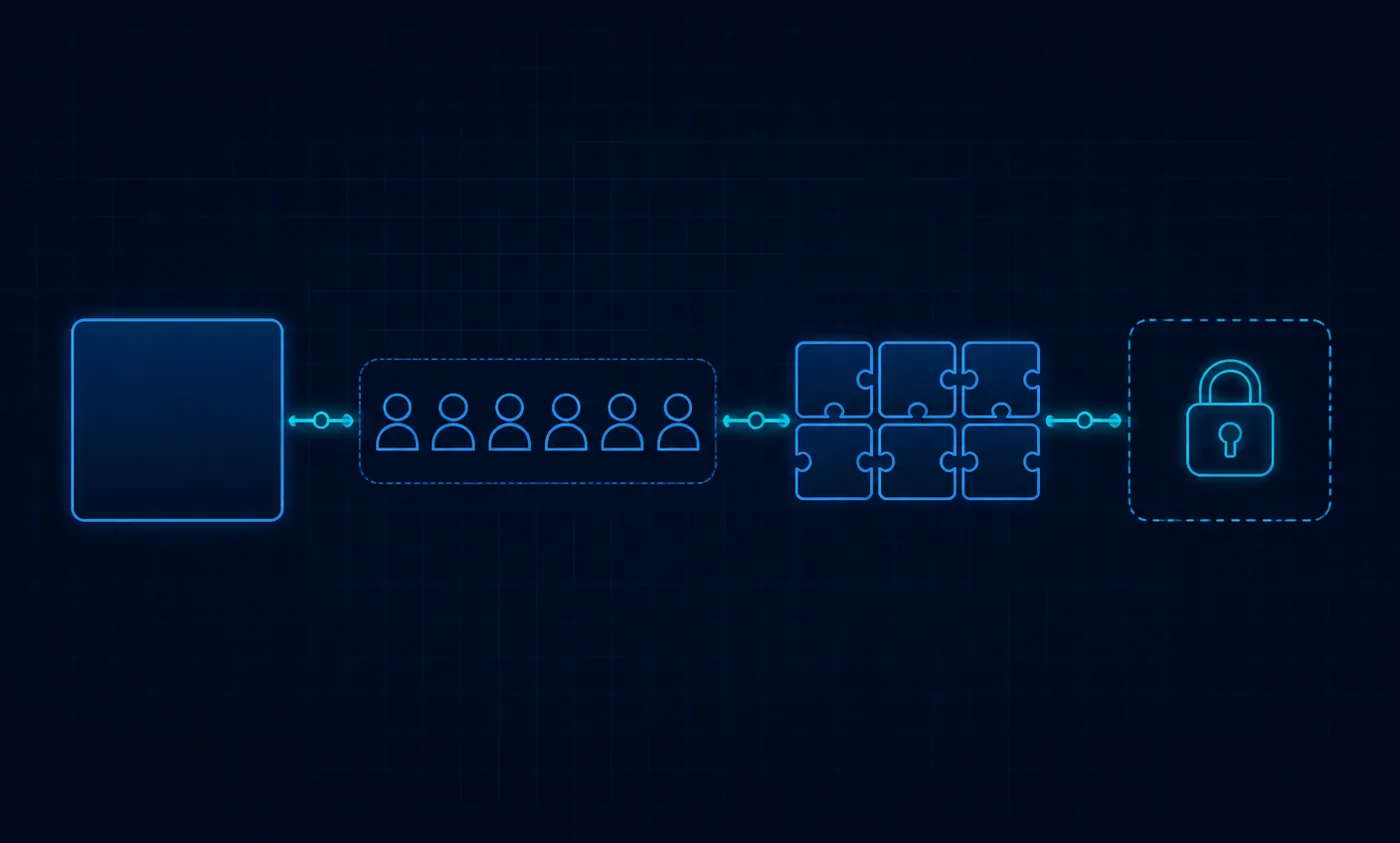
Almost every small-business payroll price is built from the four components shown above: a fixed monthly base fee, a per-person fee, optional add-ons, and — for quote-based vendors — an undisclosed component that only appears in your proposal. Gusto exposes the first three publicly; ADP RUN publishes package structure but not the numbers.
Gusto’s published plan structure
Gusto’s pricing page lists four purchasable tracks for paying a team, each with a monthly base fee plus a monthly per-person fee. Verified September 2026:
- Contractor-only — $35/mo plus $6/mo per person, shown on the pricing page with a limited-time $0/mo introductory offer on the base fee. Gusto positions it for businesses that have not hired W-2 employees yet, and lists domestic contractor payments, four-day pay and Form 1099 creation and filing among its features. Gusto also documents exclusions on this plan, including back-up withholding and other contractor withholding required by state agencies.
- Simple — $49/mo plus $6/mo per person. Gusto describes it as single-state payroll with unlimited payroll runs per month, tax filings and payments, and basic PTO and holiday-pay policies.
- Plus — $80/mo plus $12/mo per person. This is the tier where Gusto documents multi-state payroll, next-day pay and time tracking as included features.
- Premium — $180/mo plus $22/mo per person. Gusto lists a dedicated service advisor, access to certified HR experts, performance and compensation management, custom reports, priority support, and payroll migration and account setup.
Gusto also publishes prices for the add-ons that sit on top of those plans, which is the part most buyers forget to budget. Documented on the same pricing page: global contractor payments in 120-plus countries at $5 per payment to US bank accounts; state tax registration priced by state; Next-Day pay at $15/mo plus $3/mo per person on Simple; Same-day pay at $90 per payroll; Instant pay at $100 per payroll; Time & Attendance Plus at $6/mo per person on Simple; Priority Support at $30/mo plus $3/mo per person on Simple and Plus; HR Resources at $50/mo plus $5/mo per person on Simple and Plus; performance tools at $3/mo per person on Simple; a broker integration at $6/mo per eligible employee; workers’ compensation from $14/mo; Gusto Money Plus at $19/mo; and a $200 annual service charge for its tax-advantaged benefit accounts.
Atlas editorial analysis. The consequence is that a Gusto quote is reconstructable: base fee, headcount multiplier, and each add-on you switch on. It also means the cheapest-looking plan is rarely where a growing business lands, because multi-state payroll and included time tracking both sit on Plus. We assert no dollar total for any specific business; Gusto’s page is the authority for current figures.
ADP RUN’s published plan structure
ADP publishes a four-package comparison for RUN Powered by ADP, aimed at businesses with roughly 1–49 employees: Essential Payroll, Enhanced Payroll, Complete Payroll & HR Plus and HR Pro Payroll & HR. Each package’s price field on that page is a “Get pricing” call to action rather than a number. ADP’s own descriptions position Essential for businesses that need payroll, taxes and compliance help; Enhanced as basic payroll plus ZipRecruiter, State Unemployment Insurance management and a garnishment payment service; Complete as Enhanced plus basic HR support; and HR Pro as Complete plus enhanced HR support and additional employee perks.
ADP does publish promotional offers on that page — at the time of verification, a limited-time free-months offer on new small-business payroll with linked terms and conditions. Promotional terms change and are governed by ADP’s published conditions, not by anything stated here.
Atlas editorial analysis. Quote-based pricing is not a defect; it is a different purchasing model, and it is how most payroll bureaus with service teams have always sold. But it does have a practical effect on small buyers: you cannot compare ADP against Gusto on cost until you have a written ADP proposal in hand, and you should ask for that proposal to itemise the base fee, the per-employee fee, the per-payroll-run treatment, year-end form fees, and any charges for adding a state. ADP’s package page notes that W-2 and 1099 creation and delivery carry an additional fee, which is exactly the kind of line item worth getting in writing.
| Vendor | Plan / product | Public price | Billing basis | Minimums | Add-ons | Verification note |
|---|---|---|---|---|---|---|
| Gusto | Contractor-only | $35/mo base (limited-time $0/mo offer shown) + $6/mo per person | Monthly base fee plus monthly per-person fee | None published; plan is scoped to businesses with no W-2 employees | Global contractor payments at $5 per payment to US bank accounts | Gusto pricing page, September 2026 |
| Gusto | Simple | $49/mo base + $6/mo per person | Monthly base fee plus monthly per-person fee | None published | Time & Attendance Plus $6/mo per person; Priority Support $30/mo + $3/mo per person; HR Resources $50/mo + $5/mo per person; Next-Day pay $15/mo + $3/mo per person | Gusto pricing page, September 2026 |
| Gusto | Plus | $80/mo base + $12/mo per person | Monthly base fee plus monthly per-person fee | None published | Priority Support and HR Resources available; multi-state payroll and time tracking already included | Gusto pricing page and multi-state payroll page, September 2026 |
| Gusto | Premium | $180/mo base + $22/mo per person | Monthly base fee plus monthly per-person fee | None published | Discounted R&D tax-credit pricing noted for this plan; migration and setup included | Gusto pricing page, September 2026 |
| ADP | RUN — Essential Payroll | Not publicly documented — Contact sales | Not publicly documented; quote-based | Not publicly documented | Time and Attendance, retirement, workers’ compensation and health insurance listed as available additions | ADP RUN package comparison page shows a pricing request, not a price, September 2026 |
| ADP | RUN — Enhanced Payroll | Not publicly documented — Contact sales | Not publicly documented; quote-based | Not publicly documented | Adds ZipRecruiter, State Unemployment Insurance management, garnishment payment service and background checks per ADP’s description | ADP RUN package comparison page, September 2026 |
| ADP | RUN — Complete Payroll & HR Plus | Not publicly documented — Contact sales | Not publicly documented; quote-based | Not publicly documented | Adds basic HR support including HR HelpDesk and handbook support per ADP’s description | ADP RUN package comparison page, September 2026 |
| ADP | RUN — HR Pro Payroll & HR | Not publicly documented — Contact sales | Not publicly documented; quote-based | Not publicly documented | Adds enhanced HR support, applicant tracking, learning management and prepaid legal access per ADP’s description | ADP RUN package comparison page, September 2026 |
| Both | Year-end forms | Gusto: included in plan features. ADP: additional fee, amount not publicly documented | Per form or per plan depending on vendor | Not publicly documented | Reprints and delivery options: not publicly documented for either vendor | Gusto pricing page; ADP package page W-2 and 1099 note, September 2026 |
Core payroll: running the pay cycle
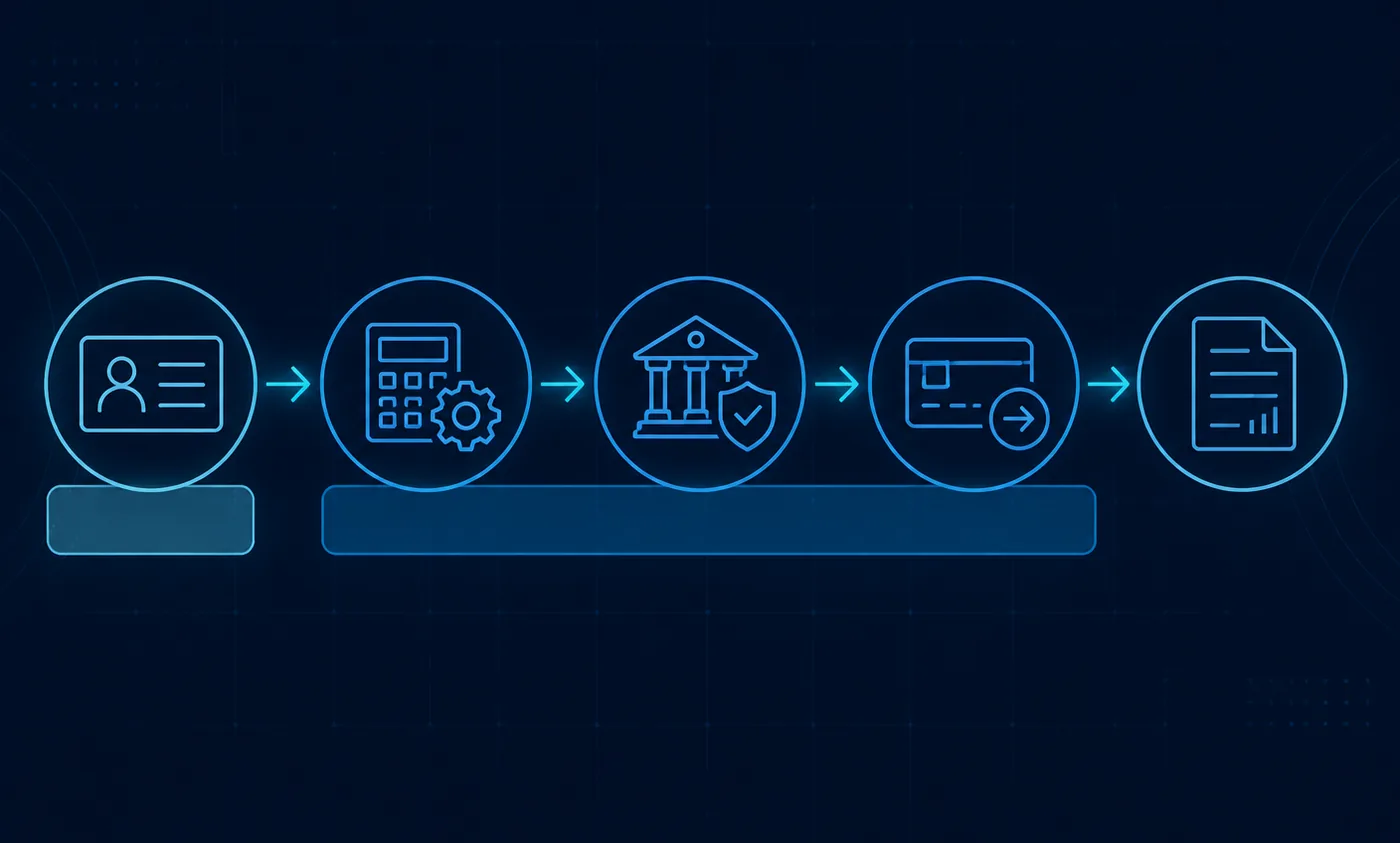
Both platforms automate the same chain: collect employee and hours data, calculate gross-to-net, file and deposit payroll taxes, move money to workers, and produce reports. Where they differ is in the mechanics around that chain.
Gusto documents unlimited payroll runs per month on its plans, automatic tax filing with every payroll run, automatic syncing of hours, expenses, benefit deductions and PTO into payroll, and a mobile app for iOS and Android. Faster funding options are sold as priced add-ons: Next-Day pay, Same-day pay and Instant pay each have published prices and stated plan availability.
ADP RUN documents payroll submission by computer, mobile app or phone call on every package — a different input model, since a phone-in option exists for businesses that do not want to run payroll in a browser. Every package also documents direct deposit, reporting, a general ledger interface exporting journal entries to QuickBooks, Xero, Wave, Creative Solutions or a generic file, and check delivery. ADP additionally documents ADP Assist on RUN: a virtual assistant, a payroll inspector aimed at catching errors before submission, and a smart timesheet import.
Atlas editorial analysis. If your bookkeeper prefers to hand payroll off, ADP’s phone-in submission and check delivery are the more interesting documented capabilities. If you run payroll yourself and want hours, PTO and deductions flowing in without reconciliation, Gusto’s documented sync model fits closer. Neither vendor publishes error rates or uptime figures, so we make no accuracy claim.
Federal and state tax filing — and what stays your responsibility
Both vendors file payroll taxes. Gusto documents that it calculates taxes and files them with the relevant government agencies every time you run payroll, in every state you need, and that it collects, stores and organises employee I-9s and W-2s and contractor 1099s. Gusto also documents state tax registration in all 50 states, sold as a priced add-on because registration is a per-state administrative task. ADP documents on every RUN package that it will calculate, file, deposit and reconcile payroll taxes, and that it reports new hires to help meet federal and state requirements; W-2 and 1099 creation and delivery are documented as carrying an additional fee.
What neither vendor removes is the employer’s legal position. The IRS treats the employer as responsible for depositing and reporting employment taxes: Publication 15 (Circular E) sets out withholding, deposit and reporting rules, Form 941 is the quarterly federal return, and W-2 and 1099-NEC obligations attach to the employer regardless of who keys the forms. IRS worker-classification guidance decides whether someone belongs on payroll at all.
- Worker classification — deciding employee versus independent contractor. Employer responsibility; IRS guidance applies.
- Accurate inputs — hours, pay rates, bonuses, terminations, benefit elections. Employer responsibility, whether or not time tracking is integrated.
- Registration in each state — Gusto offers this as a priced service; ADP does not publish a per-state registration price. The underlying obligation is the employer’s either way.
- Recordkeeping — the Fair Labor Standards Act imposes payroll recordkeeping duties on employers, which the Department of Labor publishes; software storage is a convenience, not a transfer of duty.
- Notices and agency correspondence — ADP documents help with agency inquiries on tax filing; the scope of that help in a specific contract is not publicly documented and should be confirmed in writing.
Atlas editorial analysis. This is the section most comparison articles skip, and it is where real cost appears. Both vendors file correctly on the data you give them; expensive payroll problems usually start upstream — a contractor who should have been an employee, a state where nobody registered, an unrecorded final paycheck. Choose either platform, then read the IRS material governing your own obligations.
Benefits administration
Gusto documents health benefits across more than 9,000 plans and 30-plus carriers with no broker fee and no Gusto administration fee beyond premiums, licensed advisor access at no extra cost, and an existing-broker integration at $6/mo per eligible employee. Gusto 401(k) is documented as syncing deductions with payroll and handling compliance testing; life and disability are premiums-only; workers’ compensation is pay-as-you-go from $14/mo; tax-advantaged accounts carry a $200 annual service charge.
ADP documents benefits, insurance and retirement offerings through ADP and its affiliates, and lists retirement, workers’ compensation and health insurance as available additions on every RUN package rather than as included features. Pricing for those additions is not publicly documented and is quoted.
Atlas editorial analysis. Gusto’s published “premiums only, no admin fee” position makes benefits cost easier to model. ADP’s benefits breadth is real but arrives through a quote. If benefits are the main reason you are buying payroll, the comparison you actually need is carrier availability in your state — ask both for the carrier list for your ZIP code and headcount.
HR functionality
Gusto documents hiring and onboarding tooling — custom job posts, a centralised applicant tracking system, syndication to major job boards, custom offer-letter templates — plus onboarding checklists, document storage and, on Premium, access to certified HR experts and performance and compensation management. On Simple and Plus, HR Resources (certified HR expert access, an HR resource centre, and federal and state compliance alerts) is a published add-on at $50/mo plus $5/mo per person, and performance tooling is $3/mo per person on Simple.
ADP RUN documents a wider HR catalogue tied to package tier: HR tracking, onboarding, electronic Form I-9, an employee handbook wizard, HR forms and document library, training and toolkits, salary benchmarking, background checks, an HR HelpDesk staffed by HR professionals, ZipRecruiter job posting, applicant tracking powered by CareerPlug, a learning management system with harassment-prevention training, and prepaid legal assistance through Upnetic Legal Services. Basic HR support sits at Complete, enhanced HR support at HR Pro.
Atlas editorial analysis. On documented HR surface area, ADP RUN’s upper packages cover more ground than Gusto’s plans, particularly the human-help components. That is the clearest capability difference in this comparison. Whether it justifies an unquoted premium depends on whether you would otherwise buy those services separately: a business with no HR staff and mandated-training obligations should price ADP’s HR tiers seriously; one that already has an employment lawyer and a handbook is paying for redundancy.
Time tracking and scheduling
Gusto documents time tracking as included on its Plus plan, and sells Time & Attendance Plus at $6/mo per person on Simple after a free trial. Its time tools documentation covers a time clock, shift scheduling, time-off and PTO tracking, project tracking and a time kiosk, with hours syncing into payroll.
ADP lists Time and Attendance as an available addition on every RUN package — documented as helping run payroll accurately and stay compliant by managing schedules and hours — and publishes a separate time-and-attendance solutions page. The price of that addition is not publicly documented. ADP also documents an ADP Assist smart timesheet import for pulling employee hours into RUN.
Atlas editorial analysis. For hourly-heavy teams this is often the decisive line item. Gusto publishes both the bundled position (Plus) and the unbundled price (Simple add-on), so the arithmetic is available; with ADP the addition has to be priced in your quote. If you employ shift workers, ask about geofencing and your state’s break and meal-period rules, and whether the timesheet import is included.
Contractor payments and 1099 handling
Gusto sells a contractor-only plan for businesses with no W-2 employees, documented with domestic contractor payments, four-day pay and Form 1099 creation and filing — plus documented exclusions, notably back-up withholding and other state-required contractor withholding. Global contractor payments are a published add-on covering 120-plus countries at $5 per payment to US bank accounts, with a note that exchange rates may vary.
ADP documents 1099 creation and delivery on RUN packages as an additional-fee item, and markets a separate product, WorkMarket by ADP, for independent-contractor management, along with independent-contractor solutions material for accountants. Whether contractor management is bundled into a specific RUN quote is not publicly documented.
Atlas editorial analysis. If contractors are most of your workforce, Gusto’s contractor-only plan is the more directly purchasable option because it is priced publicly for that case. With a mixed workforce, both vendors need to quote the combination — and the IRS classification question matters more to your exposure than either fee schedule.
Multi-state payroll
Gusto documents multi-state payroll as included on Plus and Premium and states that it charges no additional fee for multi-state payroll itself. It documents filing with the correct agency in every state each pay run, new-hire reporting in all 50 states — noting that its partner CorpNet charges a small one-time state-dependent fee — and state tax registration as a priced add-on.
ADP documents Multi-jurisdiction Payroll on its RUN package comparison as the ability to pay employees who work in more than one state or locality, and documents State Unemployment Insurance management as part of the Enhanced package’s description. Multi-company management with multi-company reports and tax forms is also documented for RUN.
Atlas editorial analysis. Two meanings of “multi-state” hide here. One is employees in different states, which both platforms document. The other is one employee working across state or local jurisdictions in the same period, where local-tax handling gets genuinely hard; ADP’s multi-jurisdiction wording addresses that case directly. If you have remote employees crossing city or county tax lines, get that scenario answered in the proposal.
Integrations and accounting sync
Gusto publishes a searchable integrations directory and documents automatic syncing with other business tools, with accounting connections including QuickBooks and Xero shown in its payroll documentation alongside expense, POS and enablement tools.
ADP publishes ADP Marketplace, a storefront of pre-built apps, and documents a general ledger interface on every RUN package that exports journal entries into QuickBooks, Xero, Wave, Creative Solutions or a generic file without re-keying.
Atlas editorial analysis. App counts are not a useful decision input, and we report none. The question that matters is whether your specific accounting file, POS or scheduling tool is supported in the direction you need — usually payroll journal entries flowing into the ledger. Both document QuickBooks and Xero paths, so verify the connector for your exact edition.
Support models
ADP documents 24/7 customer support on every RUN package, reachable by phone or online chat with payroll professionals. Its HR HelpDesk on the Complete and HR Pro packages is documented as phone and email access to a dedicated team of HR professionals, with enhanced support at HR Pro.
Gusto operates a public help centre and documents support access by plan: Premium includes a dedicated service advisor and priority support, while Priority Support is a published add-on at $30/mo plus $3/mo per person for Simple and Plus.
Atlas editorial analysis. Documented support hours are the cleanest difference: ADP publishes round-the-clock coverage on all RUN packages, while Gusto’s fastest access is an add-on or a Premium inclusion. We report no response-time figures, because neither vendor publishes measurable service-level commitments. If responsiveness drives your purchase, ask for a written service-level statement and the escalation path for a missed tax deposit.
Setup and implementation
Gusto documents payroll migration and account setup as included on the Premium plan; for lower plans, the scope of assisted migration is not publicly documented. Gusto documents self-service onboarding flows where employees complete their own details, and state tax registration is available as a priced service during setup.
ADP documents new-hire onboarding where employees complete their own paperwork online, new-hire reporting to federal and state agencies, and electronic Form I-9 on the packages that include it. Implementation timelines and any implementation fee are not publicly documented and are part of a quote.
Atlas editorial analysis. We publish no switching-time claim, because neither vendor publishes one and the real constraint is your own data: year-to-date wage and tax totals, prior filings, benefit deductions, garnishment orders and PTO balances. Gather that data first, run one cycle in parallel with your current system, and reconcile before cutover.
Scalability as headcount and complexity grow
Gusto’s published structure scales by moving you up a tier and by growing the per-person fee: multi-state payroll and time tracking arrive at Plus, dedicated advisory and performance management at Premium. ADP’s RUN packages are documented for businesses in the roughly 1–49 employee range, and ADP publishes a separate platform, ADP Workforce Now, for mid-sized organisations — a documented upgrade path within the same vendor.
Atlas editorial analysis. The scaling difference is architectural rather than numerical. With Gusto you likely stay on one product and pay more per person until an HR requirement pushes you to Premium. With ADP you may eventually migrate products, which is a real project but keeps payroll data with one vendor. Because ADP prices are unquoted, no cost-crossover headcount can be calculated from public information.
Gusto vs ADP decision matrix
Each cell below reflects what the vendor documents publicly. “Not publicly documented” means exactly that; it is not a negative judgement about the capability.
| Criterion | Gusto (documented) | ADP RUN (documented) | What it means for a small business (Atlas editorial) |
|---|---|---|---|
| Pricing transparency | Base plus per-person prices published for all four plans, plus prices for most add-ons | Package features published; every price is a quote request — Contact sales | You can budget Gusto before contact; ADP requires a written proposal before any cost comparison is possible |
| Payroll runs | Unlimited payroll runs per month documented on plans; mobile app for iOS and Android | Submission by computer, mobile app or phone call on every package; direct deposit and check delivery documented | Self-service teams suit either; if you want to hand payroll to someone by phone, ADP documents that path |
| Tax filing | Calculates and files with agencies every payroll run; state tax registration available as a priced add-on | Calculates, files, deposits and reconciles payroll taxes on every package; new-hire reporting included | Both file for you; the employer keeps the underlying IRS obligations either way |
| Year-end forms | Form 1099 creation and filing documented on the contractor plan; W-2 and 1099 handling documented in compliance features | W-2 and 1099 creation and delivery documented as an additional fee | Ask for the year-end fee in writing before signing — it is a recurring annual line item |
| Benefits | 9,000+ health plans across 30+ carriers, no broker fees, premiums-only pricing; 401(k) with payroll-synced deductions; workers’ comp from $14/mo | Health, retirement and workers’ compensation listed as available additions on all packages; pricing not publicly documented | Gusto’s benefits cost is modellable; ADP’s needs a quote, and carrier availability in your state decides more than either page does |
| HR features | Hiring, applicant tracking, onboarding; certified HR expert access on Premium or as a $50/mo + $5/mo per person add-on | HR HelpDesk, handbook wizard, HR forms library, training toolkits, salary benchmarks, CareerPlug ATS, LMS and prepaid legal access by tier | If you have no HR function and need staffed help plus mandated training, ADP’s upper tiers cover more documented ground |
| Time tracking | Included on Plus; $6/mo per person add-on on Simple; time clock, scheduling, PTO, project tracking, kiosk documented | Time and Attendance available on every package; price not publicly documented; smart timesheet import documented | Hourly teams should price this explicitly — bundling versus adding changes the per-head cost materially |
| Contractors | Contractor-only plan at $35/mo + $6/mo per person with 1099 creation and filing; global contractor payments in 120+ countries at $5 per US bank payment | 1099 creation and delivery for an additional fee; WorkMarket by ADP offered for contractor management | Contractor-heavy businesses can buy Gusto’s plan directly; mixed workforces should have both vendors quote the combination |
| Multi-state | Included on Plus and Premium with no additional multi-state fee; filings in every state each run; new-hire reporting in all 50 states | Multi-jurisdiction payroll documented for employees working in more than one state or locality; SUI management in the Enhanced description | Employees in several states suits either; a single worker crossing local tax lines is the case to test in writing |
| Integrations | Public integrations directory; accounting connections including QuickBooks and Xero | ADP Marketplace plus a general ledger interface exporting to QuickBooks, Xero, Wave, Creative Solutions or a generic file | Verify your exact accounting edition and the direction of sync; app counts are not a useful comparison |
| Support | Public help centre; dedicated service advisor and priority support on Premium; Priority Support add-on at $30/mo + $3/mo per person | 24/7 phone and chat support on every package; HR HelpDesk by phone and email on Complete and HR Pro | ADP publishes broader documented support hours; neither publishes response-time commitments, so ask for them in writing |
| Implementation | Payroll migration and account setup included on Premium; scope on lower plans not publicly documented | Employee self-onboarding and electronic I-9 documented; implementation timeline and fees not publicly documented | Plan a parallel run either way; migration effort is driven by your own historical data quality |
| Scalability | Tier upgrades within one product; per-person fees rise with headcount | RUN documented for roughly 1–49 employees, with ADP Workforce Now published for mid-sized organisations | Growth may mean a tier change with Gusto or a product change with ADP; no cost crossover can be computed while ADP pricing is unpublished |
Use cases and recommendations by business type
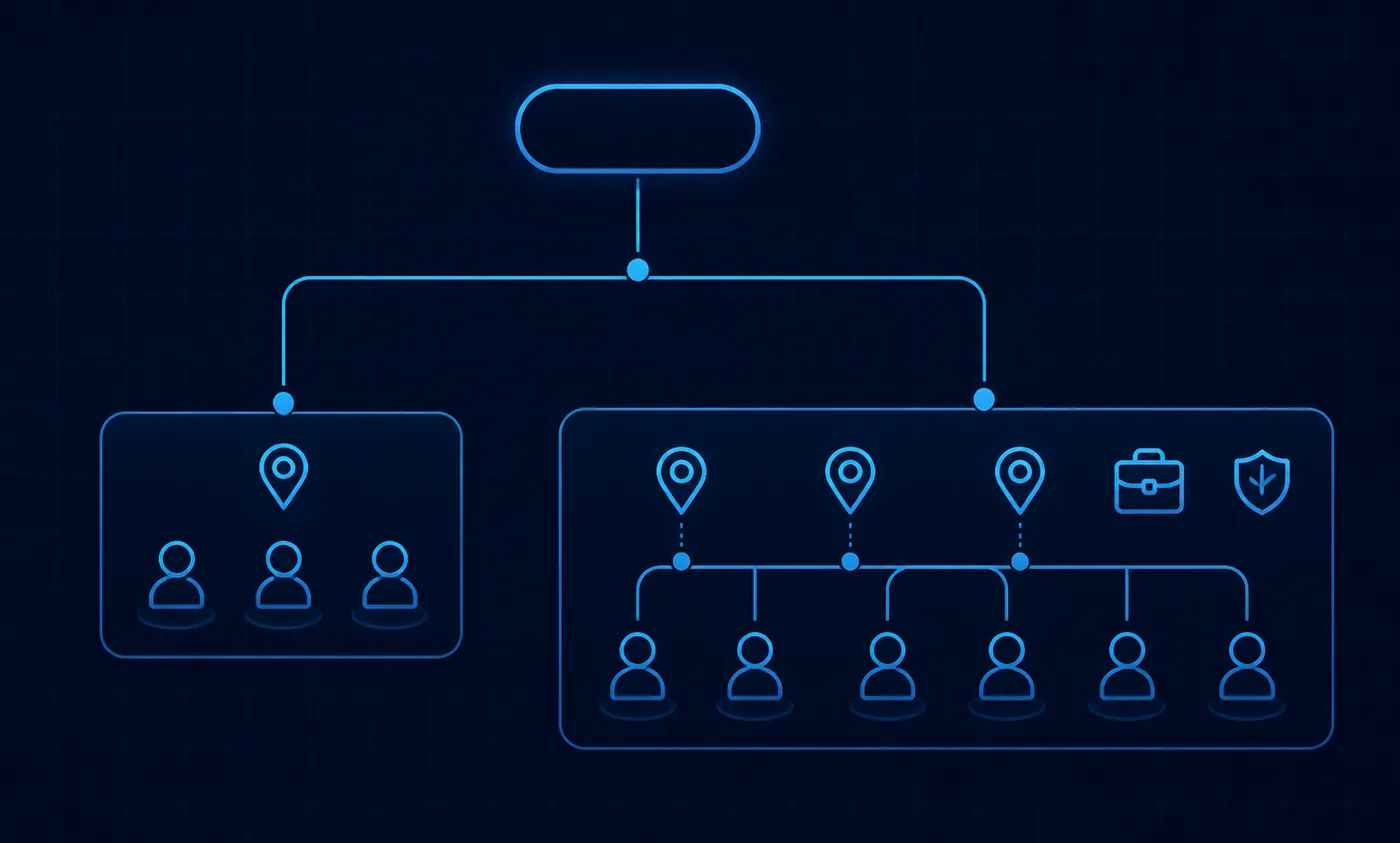
Atlas editorial analysis. The five situations below are illustrative decision framings built from documented capabilities, not case studies, customer accounts or measured outcomes. No dollar totals, savings figures or timelines are asserted.
Illustrative situation 1 — a five-person business in one state
Payroll is salaried, benefits are minimal and there is no HR function. Gusto’s Simple plan documents single-state payroll, unlimited runs, tax filings and basic PTO at a published base-plus-per-person price, which means the annual cost can be modelled before a call. ADP Essential covers the same core ground with 24/7 support, but you will need a quote to compare. Atlas view: if pricing certainty matters more than staffed HR help, the published option is the easier purchase; if you want overnight support included, get the ADP quote.
Illustrative situation 2 — twelve employees across three states
Gusto documents multi-state payroll on Plus and Premium at no additional multi-state fee, plus new-hire reporting in all 50 states and state registration as a priced service. ADP documents multi-jurisdiction payroll and SUI management. Atlas view: both are viable; the deciding detail is usually whether any single employee works across localities within a pay period, and whether you want state registration handled for you at a published price.
Illustrative situation 3 — a 25-person hourly workforce with shift scheduling
Time tracking dominates the requirement. Gusto includes time tracking on Plus and publishes the Simple-plan add-on price, and documents scheduling, PTO and kiosk tools. ADP offers Time and Attendance on every RUN package with an unpublished price, plus a documented timesheet import. Atlas view: price the time module explicitly in both proposals; for hourly teams it can be the largest variable line after the per-person fee.
Illustrative situation 4 — 40 employees, no HR staff, mandated training obligations
This is where the documented HR gap matters. ADP’s Complete and HR Pro packages document a staffed HR HelpDesk, handbook support, an ATS, a learning management system with harassment-prevention training and prepaid legal access. Gusto documents certified HR expert access on Premium or as an add-on. Atlas view: if you would otherwise buy training, handbook help and legal access separately, ADP’s upper packages deserve a serious quote; if you already have those relationships, the bundle is redundant.
Implementation roadmap before you commit

- Document requirements first. Headcount and pay types, states and localities, hourly versus salaried mix, contractor volume, benefits you offer or intend to offer, garnishment orders, and whether you need staffed HR help.
- Shortlist against documented capability, using the matrix above rather than marketing language. Mark every item where a vendor is silent — those are your quote questions.
- Verify pricing in writing. Confirm current Gusto plan and add-on figures on its pricing page. From ADP, request an itemised proposal covering base fee, per-employee fee, pay-run frequency, year-end form fees, time and attendance, benefits administration and any charge for adding a state.
- Set up in parallel. Load year-to-date wages and taxes, prior filings, benefit deductions, garnishments and PTO balances, then run one cycle alongside your current system and reconcile gross, net, taxes and deductions.
- Launch, then check the first filing. Confirm the first federal and state deposits and returns actually posted, and keep your prior system’s records accessible until year-end reporting is complete.
Final decision framework
Atlas editorial analysis. Rather than a winner, use the conditions below, each of which points at a documented difference rather than a preference.
- If budget certainty before contact is a requirement — Gusto publishes plan and add-on prices; ADP RUN prices are not publicly documented.
- If you need staffed HR services bundled with payroll — ADP’s Complete and HR Pro packages document the broader HR service catalogue, including HR HelpDesk, handbook support, LMS training and prepaid legal access.
- If round-the-clock support is non-negotiable — ADP documents 24/7 phone and chat support on every RUN package; Gusto’s priority support is an add-on or a Premium inclusion.
- If you only pay contractors today — Gusto publishes a contractor-only plan priced for exactly that case.
- If you employ workers across multiple localities in one pay period — ADP documents multi-jurisdiction payroll explicitly; verify your specific scenario with both vendors in writing.
- If included time tracking matters — Gusto documents it as included on Plus; ADP documents it as an available addition with unpublished pricing.
- If you expect to outgrow small-business payroll — ADP publishes Workforce Now as a documented upgrade path; Gusto’s published path is tier upgrades within one product.
Whichever way those conditions fall, the deciding artefact is a written proposal you can compare against Gusto’s published prices — not a feature grid, and not a recommendation from an article that has not seen your payroll.
Limitations of this comparison
- No live payroll processing. AtlasProfitAI did not process live payroll, file returns or open support tickets on either platform. Nothing here is a test result, and no accuracy, uptime or response-time performance is claimed.
- Capabilities and prices change. All plan, feature and pricing facts were read from the vendor pages in Sources in September 2026. Vendors revise pricing pages, promotions and package contents without notice; treat the vendor page as authoritative over this article.
- ADP pricing is quote-based. RUN package prices are not publicly documented, so no ADP cost figure, total or comparison is presented. Quoted pricing varies by headcount, pay frequency, states, add-ons and negotiation, and your proposal may differ substantially from another business’s.
- State requirements differ. Registration, unemployment insurance, local income taxes, pay-frequency rules, final-paycheck timing and paid-leave mandates vary by state and sometimes locality. Neither platform’s feature list resolves your state obligations.
- Vendor documentation is incomplete by design. Package pages do not disclose every implementation step, support boundary, migration limit or contractual term. Items marked “Not publicly documented” reflect that silence, not an absence of capability.
- Contract terms decide the outcome. Verify fees, term length, renewal and price-increase mechanics, year-end form charges, off-cycle run charges, data-export rights and termination terms in your own agreement before purchase.
- Not tax, legal or accounting advice. This article is editorial research. Consult a qualified payroll, tax or employment professional for your circumstances.
Frequently asked questions
Can I compare Gusto and ADP on price directly?
Not from public information alone. Gusto publishes base and per-person prices for each plan plus add-on prices. ADP RUN publishes package contents but routes pricing to a quote, so an apples-to-apples cost comparison requires a written ADP proposal. Any article presenting a side-by-side dollar comparison of the two is using numbers ADP has not published.
Do both vendors file federal and state payroll taxes?
Yes, and both document it. Gusto documents calculating and filing with the relevant agencies every payroll run; ADP documents calculating, filing, depositing and reconciling payroll taxes on every RUN package. The employer remains responsible for the underlying obligations described in IRS Publication 15 and the related returns.
Which one handles multi-state payroll?
Both document it. Gusto includes multi-state payroll on Plus and Premium with no additional multi-state fee. ADP documents multi-jurisdiction payroll for employees working in more than one state or locality. If a single employee crosses local tax jurisdictions in one pay period, confirm that specific case with the vendor in writing.
How long does it take to switch payroll providers?
Neither vendor publishes a switching-time commitment, so this article states none. The practical constraint is your own data: year-to-date wages and taxes, prior filings, benefit deductions, garnishment orders and PTO balances. A parallel run before cutover is the reliable way to find gaps.
Related AtlasProfitAI research
- Zapier vs Make: small business automation compared — the same documentation-first method applied to workflow automation pricing and maintenance.
- Best MDM for small business: iOS and Android device management — useful if payroll data will be accessed from employee-owned phones.
- How AtlasProfitAI researches and verifies these comparisons — our sourcing rules, verification dates and correction process.
Sources
All vendor facts above were read from the pages below in September 2026. Vendor pages are authoritative for current pricing and features; IRS and Department of Labor pages are authoritative for employer obligations.
- Gusto — Pricing, plans and add-ons (plan prices, per-person fees, add-on prices, contractor plan exclusions)
- Gusto — Payroll product documentation (unlimited runs, automatic filing, syncing, mobile apps, compliance documents)
- Gusto — Multi-state payroll (included on Plus and Premium, no extra multi-state fee, 50-state new-hire reporting)
- Gusto — Benefits (health plan and carrier counts, no broker fees, 401(k) payroll sync)
- Gusto — Health benefits (medical, dental and vision administration)
- Gusto — Retirement / 401(k) (deduction sync, compliance testing, tax-credit forms)
- Gusto — HR tools (hiring, applicant tracking, onboarding, compliance alerts)
- Gusto — Time clock (time capture integrated with payroll)
- Gusto — Shift scheduling (scheduling integrated with payroll)
- Gusto — Time off and PTO tracking (PTO policies and accruals)
- Gusto — Integrations directory (accounting and business-tool connections)
- Gusto — Help Center (self-service support documentation)
- ADP — RUN Powered by ADP package comparison (four packages, included and available features, 24/7 support, tax filing, W-2/1099 additional fee, multi-jurisdiction payroll, quote-based pricing)
- ADP — RUN Powered by ADP platform overview (small-business payroll and HR platform positioning)
- ADP — Small business payroll for 1–49 employees (small-business scope and promotions)
- ADP — Workforce Now (documented platform for mid-sized organisations)
- ADP — Benefits, insurance and retirement (benefits offerings through ADP and affiliates)
- ADP — Time and attendance solutions (scheduling and hours management)
- ADP — Integrations (ADP Marketplace and ERP data flow)
- ADP Marketplace (pre-built apps and plug-ins)
- ADP — WorkMarket 1099 contractor management (contractor management product)
- IRS Publication 15 (Circular E), Employer’s Tax Guide (withholding, depositing and reporting rules)
- IRS — About Form 941 (quarterly federal employment tax return)
- IRS — About Form W-2 (wage and tax statement obligations)
- IRS — About Form 1099-NEC (nonemployee compensation reporting)
- IRS — Employment taxes for small businesses (employer payroll tax responsibilities)
- IRS — EFTPS (federal tax deposit mechanism)
- IRS — Independent contractor or employee (worker classification guidance)
- U.S. Department of Labor — FLSA recordkeeping (employer payroll recordkeeping duties)
- U.S. Department of Labor — State labor office contacts (state-specific requirements)